
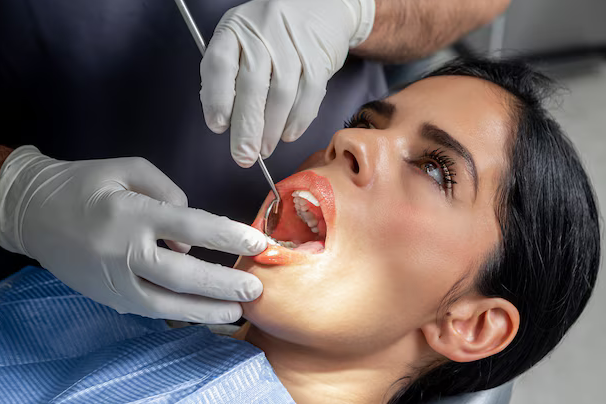
The primary objective of periodontal treatment Huntsville AL is to halt gum disease progression through non-surgical interventions like scaling and root planing to address plaque and tartar buildup, and infected tissue, as well as using surgical methods.
Treatment Options
Nonsurgical Treatments
Removing tartar and bacteria from your tooth surfaces and below the gumline is known as scaling. This can be accomplished with instruments, a laser, or an ultrasonic device. It may be done using instruments, a laser or an ultrasonic device.
Root planing smooths the root surfaces. This prevents further accumulation of tartar and bacteria. It also aids your gums in reattaching to your teeth. It also helps your gums attach to your teeth again.
Oral or topical antibiotics can be effective in managing bacterial infections. Antibiotic mouth rinses or gels placed directly into gum pockets can be considered topical antibiotics. In some cases, oral antibiotics are required to eliminate bacteria that cause infections. Sometimes oral antibiotics are needed to get of bacteria that cause infections.
Surgical Treatments
The periodontal treatment Huntsville AL procedure is also known as pocket reduction surgery or flap surgery. Your periodontist makes incisions in your gums to carefully fold back the tissue. This exposes the tooth roots to make scaling and root planing more effective.
Soft tissue grafts. As gum tissue diminishes, the gumline recedes, resulting in the exposure of some of your tooth roots. The damaged tissue may require some reinforcement. The process typically involves removing a small amount of tissue from the roof of the mouth or using tissue from another donor source and then attaching it to the affected area.
Periodontitis causes this procedure to be performed when it destroys the bone surrounding the root of your tooth. The graft may be constructed from small pieces of your own bone, or alternatively, it could be made of artificial material or donated bone.
Tissue guided regeneration. It enables the regrowth of bone tissue that had been damaged by bacterial infection. In one approach, your dentist places a specific type of membrane between existing bone and your tooth. Preventing unwanted tissue growth, the material enables bone to regenerate in the healing area.