
A missing tooth leaves more than just a visible gap in your smile. Over time, the teeth surrounding that empty space begin to drift, the jawbone beneath it starts to lose density, and the way you bite and chew gradually shifts in ways that can create problems far beyond the original loss. Addressing a missing tooth promptly matters — and for many patients, dental bridges offer an effective, time-tested solution that restores both function and appearance without the surgical component that implants require. If you are weighing your options after losing a tooth, understanding what bridges are, how they work, and what the experience involves gives you a much clearer foundation for making the right decision.
What Dental Bridges Are and How They Function
A dental bridge is a fixed restoration designed to literally bridge the gap left by one or more missing teeth. The structure consists of two or more crowns placed on the natural teeth on either side of the gap — these are called abutment teeth — with one or more artificial teeth, known as pontics, suspended between them. The entire assembly is cemented permanently in place, meaning it does not come in and out like a partial denture. Once bonded, a bridge functions much like natural teeth: you eat, speak, and smile normally without giving it a second thought. Dental bridges are fabricated from several materials, with porcelain and porcelain-fused-to-metal being the most common choices. All-porcelain bridges offer the most natural appearance and are particularly well-suited for front teeth where aesthetics matter most. Porcelain-fused-to-metal versions provide additional strength, which makes them a good choice for back teeth under heavier chewing forces.
The Different Types Worth Knowing About
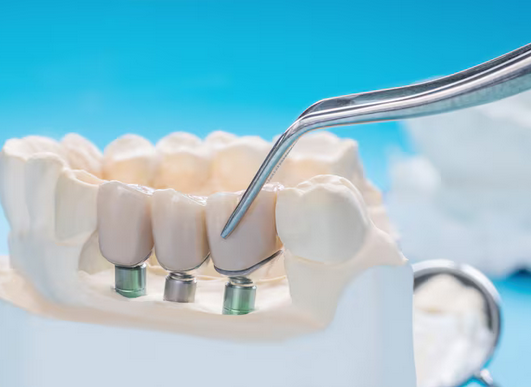
Not all bridges are constructed the same way, and understanding the variations helps you have a more informed conversation with your dentist. The traditional bridge — the most widely used design — relies on crowning the two neighboring teeth to anchor the pontic between them. This is highly effective but does require permanently altering those adjacent teeth, which is a factor worth considering if they are otherwise healthy. A cantilever bridge uses only one abutment tooth instead of two and is typically used when there is only one neighboring tooth available on one side of the gap. Maryland bridges — sometimes called resin-bonded bridges — use a metal or porcelain framework bonded to the backs of neighboring teeth rather than full crowns, which preserves more of those adjacent teeth but provides less stability. Implant-supported dental bridges use implants rather than natural teeth as anchors and are an excellent option when multiple consecutive teeth are missing and a full implant for each tooth is not practical.
What the Treatment Process Looks Like
Getting a dental bridge typically requires two appointments spread over a few weeks. At the first visit, the abutment teeth are prepared by removing a thin layer of enamel from their outer surfaces to create room for the crowns that will anchor the bridge. Impressions or digital scans of the prepared teeth are then taken and sent to a dental laboratory where your custom bridge is fabricated to precise specifications. A temporary bridge is placed in the meantime to protect the prepared teeth and maintain your appearance and function while the permanent piece is being made. At the second appointment, the temporary bridge is removed, the permanent one is checked for fit, bite, and appearance, and then cemented securely in place. Most patients adapt to their new bridge within a few days and quickly find it feels entirely natural.
Caring for Your Bridge to Make It Last
With proper care, a well-made dental bridge can last ten to fifteen years or longer — sometimes significantly more. The most important maintenance habit is keeping the area beneath the pontic clean, as food and bacteria can accumulate in the space between the artificial tooth and the gum tissue. Traditional flossing under a bridge requires a floss threader or a water flosser to reach that area effectively. Your dentist or hygienist will show you the correct technique at your placement appointment. Brushing twice daily, attending regular professional cleanings, and avoiding habits like chewing ice or using your teeth to open packaging all help protect the integrity of the restoration. The crowned abutment teeth still have natural tooth structure beneath them and remain susceptible to decay at the margins, so consistent oral hygiene is just as important after a bridge as before.
Bridges Versus Implants: Choosing What Makes Sense for You
One of the most common questions patients have is how dental bridges compare to implants and which is the better choice. The honest answer is that it depends on your individual situation, priorities, and overall oral health. Implants preserve the jawbone beneath the gap and do not require altering neighboring teeth — significant advantages for long-term oral health. However, they involve surgery, a longer treatment timeline, and a higher upfront cost. Bridges are a faster, non-surgical path to restoring a missing tooth and are often the more practical choice when the neighboring teeth already need crowns, when bone volume is insufficient for an implant, or when budget and timeline are primary considerations. Your dentist is the right person to walk through this comparison with you specifically — taking into account the condition of your neighboring teeth, your bone health, and your personal goals to help you arrive at the approach that genuinely fits your life.